
Horses
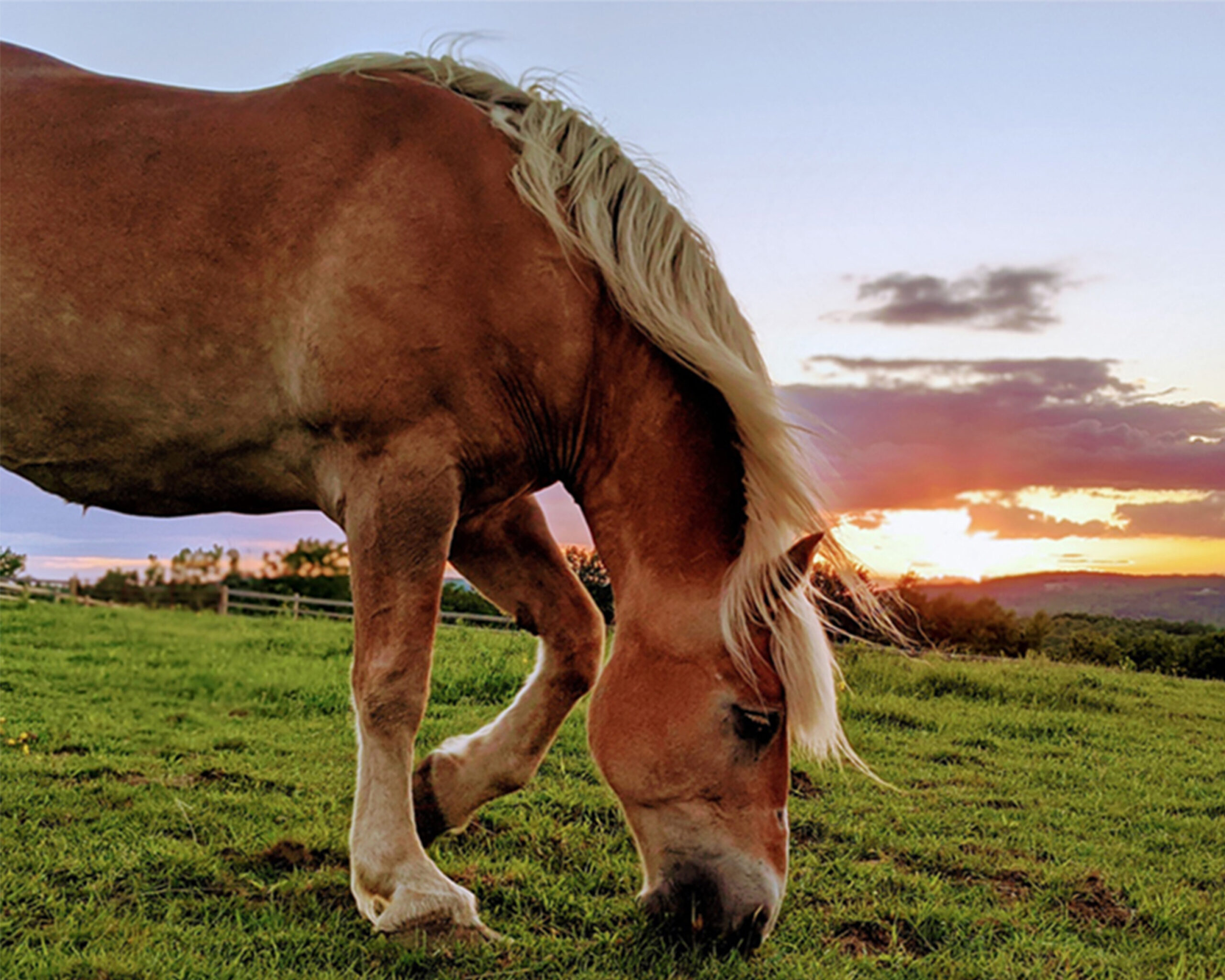
Most of our rescued horses are survivors of the racing industry. Horses often begin rigorous racing training before their bones have fully developed, making them more prone to injury. Of the many horses bred for racing, only the most promising horses are kept, with the others often ending up at auctions or slaughterhouses. Drug use to keep injured horses running through pain is prevalent, as are broken bones and even dying on the track. Often when horses are seriously injured in racing or training they are killed on site or sent to slaughter. Even though horse slaughter is technically not allowed in the U.S., horses are routinely sent to slaughter in Canada and Mexico. Some of our other horses, like Maven and Max, are draft horses that were being used for physical labor. Their living/working conditions were so egregious that the other horse on this farm was worked and starved to the point where he died, prompting the investigation that saved the lives of the others. Max was skeletal when he arrived, weighing less than half of his ideal weight. After lifetimes of use and abuse, our rescued horses are finally free to live their lives in peace when they come to PRS. While horses are often expected to “give” people something in exchange for their care, here nothing is ever expected or taken from them.
Donkeys
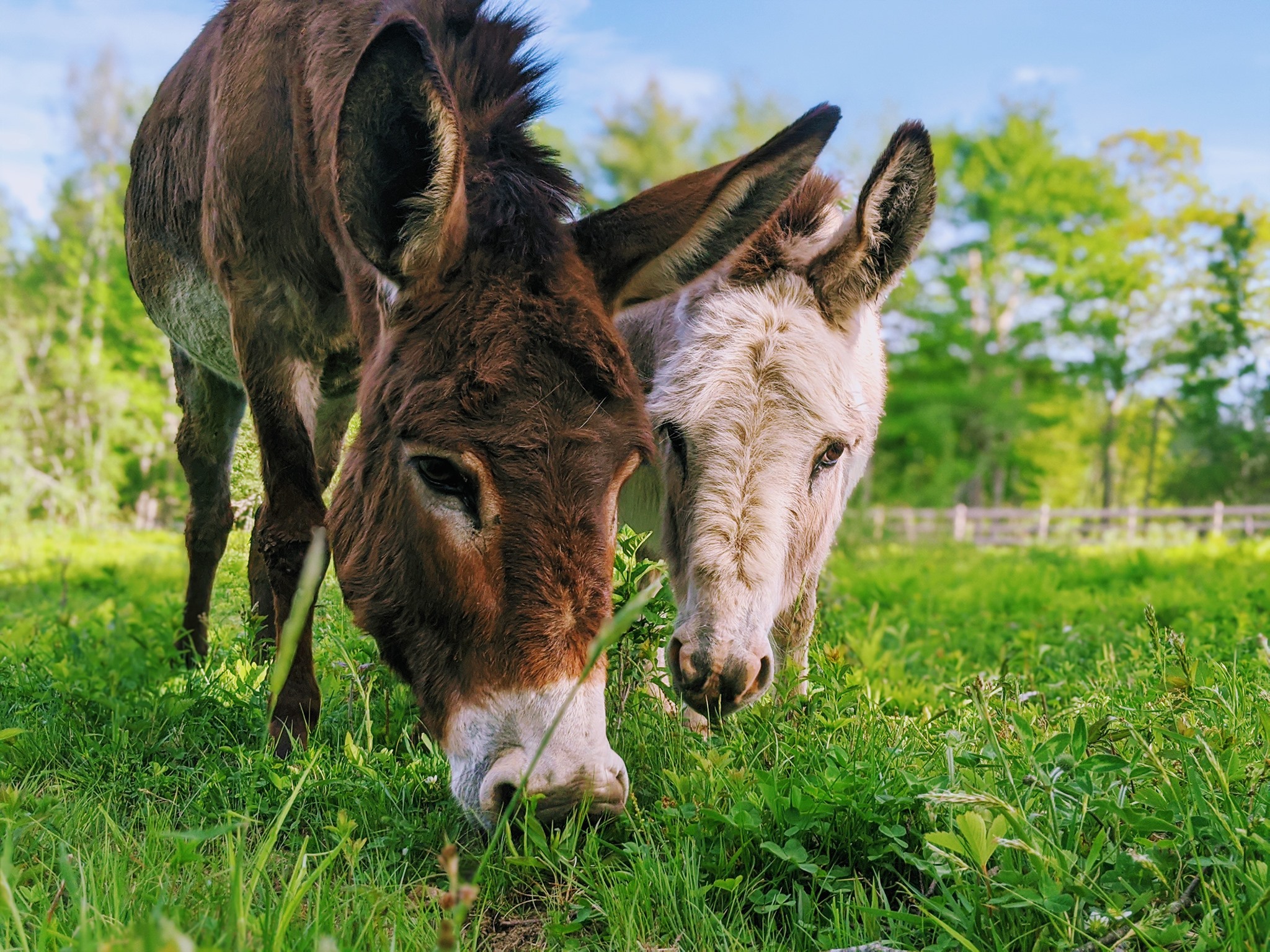
Globally, donkeys are the most common “beast of burden” being forced to perform free labor for humans. There is also a large demand for their flesh, milk, and their hides (to make Eijao - a traditional Chinese medicine from the gelatin of their boiled skins) internationally. Also known as burros, wild donkeys are routinely rounded up and sent to be killed (along with wild horses) to keep them off the land farmers want to cheaply lease from the government for grazing farmed animals, for big game hunting, or other for-profit, commercial uses of our public lands. Many unwanted donkeys here in the U.S. are sent to Canada or Mexico (just like horses are) where they are slaughtered. Donkeys have a reputation for being stubborn, but they are actually just very cautious animals by nature. When asked to do something they have never done before, donkeys carefully consider what they are being asked and try to assess the risk before acting.